



A clear Vancouver real estate guide to one of the City’s most important planning shifts
Vancouver’s housing landscape is evolving again. If you own property – or plan to buy – in the city, this change matters. The Villages Planning Program, introduced through the broader Vancouver Plan, will reshape how neighbourhoods grow, densify, and function over the coming years.
Importantly, this program aims to create complete, walkable communities while expanding housing choice across Vancouver. As a result, it carries real implications for property values, redevelopment potential, and long-term demand.
What Is the Villages Planning Program?
The Villages Planning Program identifies 25 neighbourhood “Villages” across Vancouver. These areas will function as local hubs where residents can live, shop, and access essential services within a short walk, bike ride, or roll.
Currently, the City is actively planning for 17 Villages. Meanwhile, other planning programs address the remaining eight. Together, these initiatives support a citywide shift toward livable density rather than large-scale high-rise development.
Specifically, the program focuses on:
- Low-rise multi-family housing, typically 3–6 storeys
- More neighbourhood shops and services
- Safer, greener, and more walkable streets
- Public spaces that encourage daily activity and connection
Why the Villages Plan Matters for Vancouver Real Estate
From a real estate perspective, this program is highly relevant. Neighbourhoods identified as Villages – or located nearby – often attract stronger long-term demand. Walkability, amenities, and housing flexibility drive that interest.
For homeowners, this can mean:
- Increased future redevelopment or up-zoning potential
- Improved resale appeal due to nearby shops and services
- Gradual neighbourhood change without high-rise disruption
For buyers and investors, Villages may offer:
- Early access to growth-oriented locations
- Long-term appreciation tied to infrastructure investment
- More housing options beyond detached homes
As a result, understanding Village boundaries now can offer a strategic advantage later.
Draft Land Use Areas: What’s Actually Changing
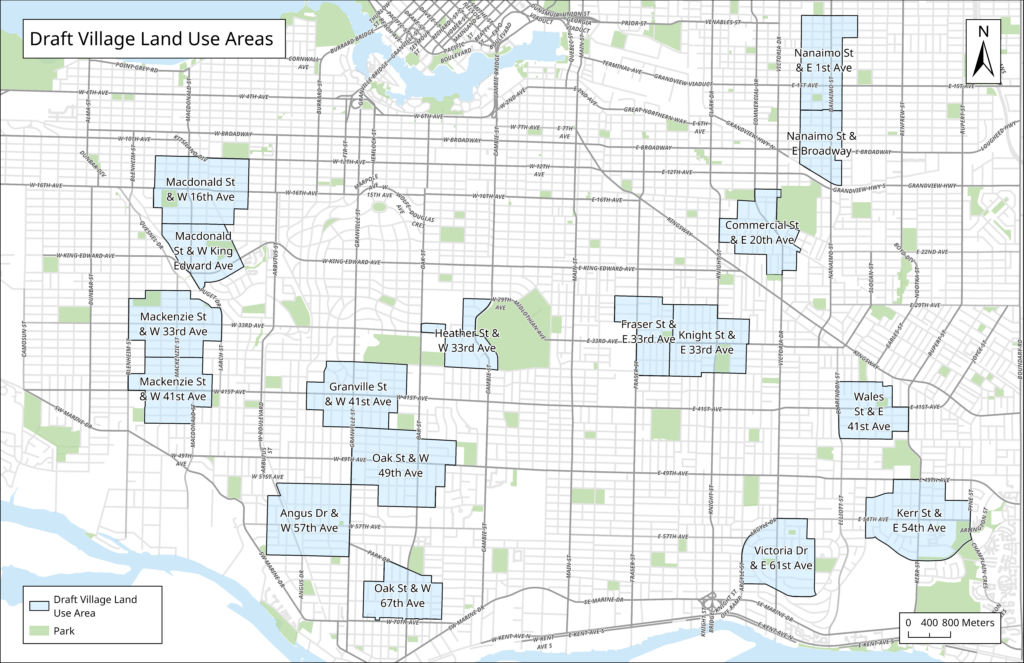
In late 2025, the City released updated draft land use areas for each Village. These maps show where future low-rise residential and mixed-use buildings could be allowed. However, the boundaries are not final.
To create these draft areas, the City followed several steps:
- First, a retail study estimated future retail demand
- Next, planners mapped retail expansion areas for each Village
- Then, they applied a five-minute walking radius (about 400 metres) from those areas
- Finally, they refined boundaries using public feedback, on-the-ground conditions, and Vancouver Plan policies
Together, these steps highlight where housing change is most likely to occur.
Public Engagement: Where the Process Stands Now
The Villages Planning Program is currently in Phase 2: Emerging Ideas & Directions.
Between November and December 2025, the City hosted:
- Virtual open houses
- In-person neighbourhood events
- An online public survey
Through this engagement, residents shared feedback on housing scale, land use, and neighbourhood character. The City will release a public engagement summary in February 2026.
Importantly, this feedback will directly shape zoning and land-use decisions moving forward.
What Happens Next?
Next, City staff will finalize the Villages Plan and identify areas for City-initiated rezoning. Council will review these recommendations in 2026.
While changes will roll out gradually, the planning direction is clear. Vancouver is prioritizing low-rise density near shops, transit, and daily services.
If you own property within or near a Village area, now is the time to:
- Review your current zoning
- Understand future land-use allowances
- Plan strategically for resale or redevelopment
Why This Matters Long-Term
Ultimately, the Villages Planning Program reflects a broader shift in Vancouver’s housing strategy. Instead of focusing on isolated density, the City is building complete neighbourhoods that support daily life.
For buyers, sellers, and investors, these plans quietly influence where value concentrates over time. Knowing where growth will occur allows you to make smarter real estate decisions.
If you want to understand how the Villages Planning Program affects your specific neighbourhood or property, expert guidance can make all the difference.
Contact Taylor Ross, your local Westside Real Estate Advisor today to learn more about the Villages Plan and how this might affect your home and the area.